
Distinguished Alumni Dr. Tony Schountz
Dr. Tony Schountz
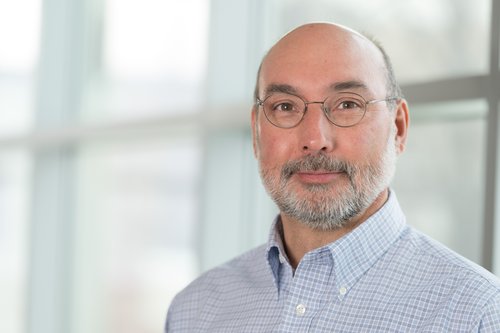
Dr. Tony Schountz (MS ’91, Biology) is a professor in the Department of Microbiology, Immunology and Pathology at Colorado State University. His laboratory studies the immune responses of animals that serve as natural hosts for viruses capable of infecting people.
Among his research subjects are Jamaican fruit bats and deer mice. By studying how these animals respond to infection, Schountz and other scientists seek to understand how some species can control viruses without developing the severe illness those viruses may cause in humans. During the COVID-19 pandemic, his laboratory contributed to research on SARS-CoV-2 infection and transmission in animals.
His path to that work began at Emporia State. As a graduate biology student, Schountz learned to design and conduct research under faculty mentor Helen McElree. Another mentor, Rodney Sobieski, impressed upon him the discipline scientific work demands.
“At ESU, I learned what intensity was,” Schountz said of Sobieski’s influence. “He lit a fire under you if you didn’t get motivated and do what needed to be done.”
Emporia State also gave Schountz early experience as a graduate research assistant and teaching assistant. He taught microbiology, laboratory and hematology courses while building confidence in his own abilities.
After earning his master’s degree, Schountz completed a doctorate at Kansas State University and eventually joined Colorado State. His work now contributes to understanding how viruses persist in animal hosts and what happens when diseases move between species.
Schountz was surprised to learn he would receive the Distinguished Alumni Award. “I didn’t think I had much of a chance because a lot of good people have gone through Emporia State,” he said.
For Schountz, the recognition traces back to the faculty members who challenged him, trusted him with responsibility and helped turn his interest in biology into a career of consequential research.